


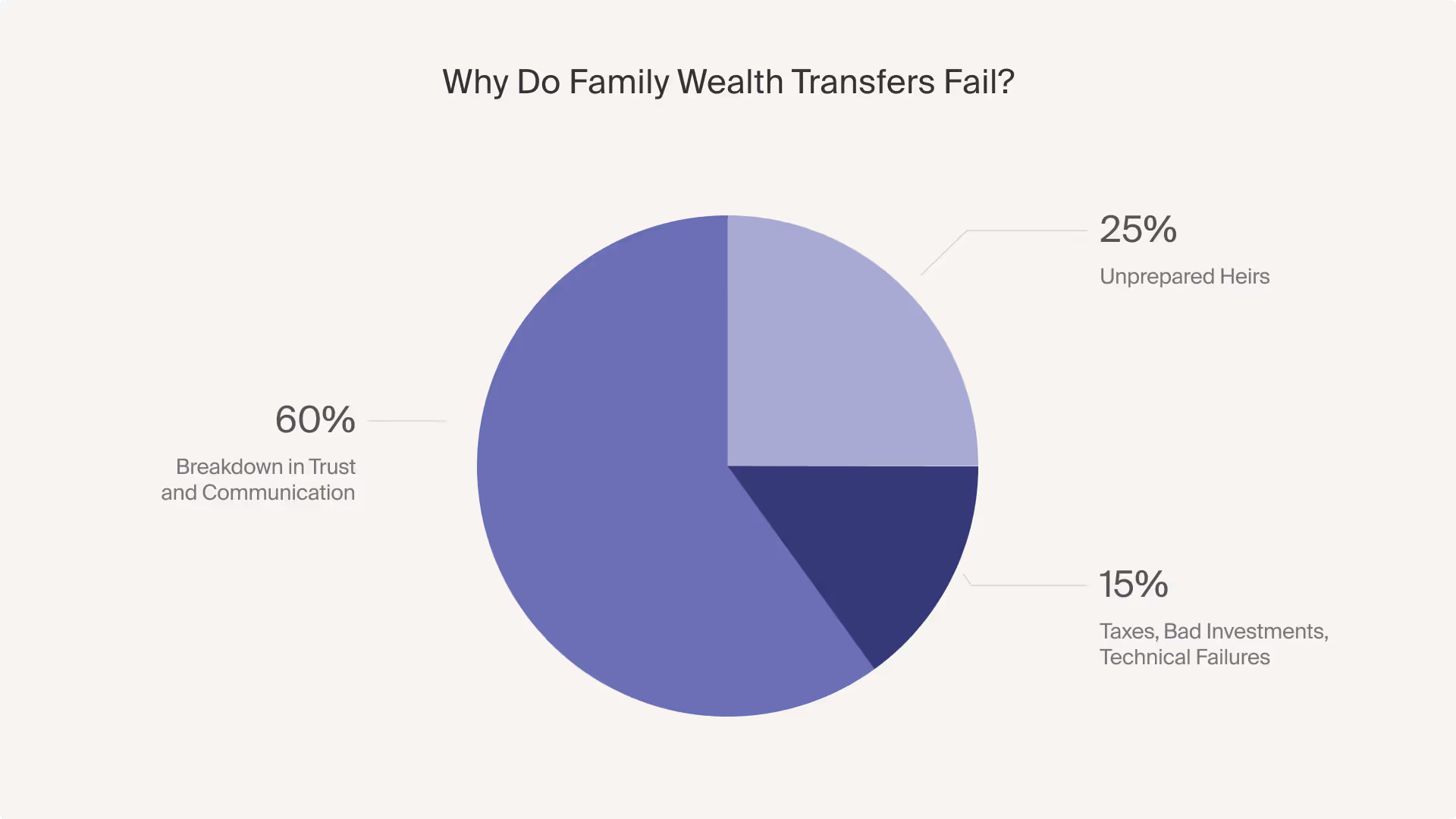
Most financial advisors assume that technical estate planning — well-drafted wills, airtight trusts, and efficient tax planning — is the key to successful wealth transfer. But research from the seminal book, Preparing Heirs, based on interviews of 3,200 families, shows otherwise:
First, 60% of wealth-transfer failures stem from a breakdown in communication and trust.
Another 25% of such failures are the result of unprepared heirs.
Legal and technical issues? Those account for just 15% of failed transfers.
Finally, a lack of shared values or common vision for the family legacy is responsible for around 10 percent of estate planning failures.
Yes, good technical planning skills, solid tax planning, and well-drafted trusts, wills, and other documents are important for success. But as the data show, all these factors are not sufficient by themselves. Something else is clearly needed.
Defining Success
So what does a successful wealth transfer look like? According to authors Victor Preisser and Roy Williams, a successful family wealth transfer is one in which:
- The heirs retain the family wealth, and
- The family remains cohesive and communicative after the wealth passes. That is, family relationships survive the wealth transfer intact, and the family unit continues to function.
The reason? It usually isn’t taxes or bad investment decisions. The most common reason intergenerational wealth transfers fail, by far, is a breakdown in family communication and trust, accounting for at least 60% of intergenerational wealth transfer failures.
For advisors, this creates both a risk and an opportunity.
Advisors who remain hyperfocused on generating documents at the expense of grappling with the real and difficult family dynamics often lose assets at the generational handoff. In contrast, advisors who facilitate structured family conversations become indispensable—and dramatically increase the odds that assets stay under their stewardship.
As financial advisors, one of the most important things we can do for our clients is to go beyond the technical planning, and get fully engaged with the all-important human dimension of estate planning.
We can do this by helping our clients prepare their families for the challenge of maintaining and expanding the financial legacy - before a death or disability forces the issue.
At the nexus of that process, the intersection of all three of the biggest threats to successful wealth transfer, is the family wealth meeting.
“A family wealth meeting is a structured, advisor-facilitated conversation designed to align heirs, clarify intent, and prepare the next generation—before documents or distributions become urgent. -Victor Preisser and Roy Williams
What Is a ‘Family Wealth Meeting?’
First, let’s talk about what it’s not.
Properly implemented, a family wealth meeting isn’t just an “estate planning meeting.”
Yes, estate planning topics like wills and trusts will be an important element of the family wealth meeting - especially in its early iterations. But the problem with calling it an “estate planning meeting” is that no one wants to talk about it!
Few people are eager to grapple with mortality. And to people who aren’t financial professionals, estate planning is a terribly dry and boring topic. Nobody is excited to deal with it. And so advisers trying to push this idea are met with a wall of resistance, procrastination, or avoidance.
In contrast, preserving and transferring the family’s wealth and financial legacy is a much more interesting and exciting topic. It’s much easier to get ‘buy-in’ not just from clients directly, but also from their adult children and grandchildren. After all, they have a direct interest in it themselves!
That’s the approach taken by Vanessa Martinez, CEO of Expressive Wealth, a Chicago RIA overseeing some $135 million in assets across 70 households.
How does she introduce the idea? First, she works hard on building a great relationship with her clients. That’s job number one. And then, when the time comes, and the topic turns to preserving the family’s financial legacy, she simply asks her client: “How would you feel if we all got together?”
Why Promote Family Wealth Meetings?
The family wealth meeting gives you, the advisor, a chance to directly address the three biggest threats to successful wealth transfers:
- It facilitates communication among family members.
- It gives family heads a chance to express their values, vision, and intention for the wealth they will be passing on.
- It helps prepare heirs for their eventual responsibilities as stewards of the family financial legacy.
Moreover, good family wealth meetings give you and the rest of the advisory team more chances to catch and remedy potential technical estate planning defects, such as the failure to account for important assets or properly transfer titles to a trust.
“81% of heirs say they are likely to replace their parents' financial advisors within a year of receiving their inheritance. “ –Capgemini 2025 World Wealth Report
Benefits for Advisors
Facilitating the family wealth meeting has important advantages for financial advisors, too. Here’s why:
According to the Capgemini 2025 World Wealth Report, more than eight out of ten say they are likely to replace their parents’ financial advisors within a year of receiving their inheritance.
As Baby Boomers reach the end of their life expectancy, that trend represents a real danger to advisors’ hard-won AUM.
The good news: More than any other profession, good financial advisors are uniquely positioned to prompt clients to bring client families together to discuss the eventual transfer of family wealth, and help facilitate the family wealth transfer conversation.
- With every meeting you conduct, you’ll be in front of new people––demonstrating your knowledge, expertise, professionalism, and wisdom.
- You’ll be building relationships with the next generation.
- You’ll be in a position to retain your client’s assets in your own AUM, even after they pass away, preventing asset erosion.
- You’ll be filling a need: More than 9 in 10 clients expect estate planning services from their financial advisors–yet only around 22% are fulfilling that expectation. If you aren’t meeting that need, someone else will be talking to your clients shortly.
- You’ll likely uncover additional assets that you may be able to bring under your management. For example, it’s routine for advisors to discover old 401(k)s, and retirement accounts, and other assets that can be rolled over to IRAs and added to AUM.
Most importantly, by facilitating the family wealth meeting, your relationship with your clients will be less transactional, and more personal. It’s a chance to differentiate yourself from the “roboadvisors” and position yourself as a trusted family advisor - well worth your fees.
Preparation Phase Best Practices
- Hold a pre-meeting with the client (the parents) first.
This meeting helps your clients clarify goals, establish boundaries, and set privacy preferences, including what they do and don’t want shared with heirs at this point.
This protects confidentiality and keeps the discussion within what the clients authorize.
It also helps bring couples into unity, so they don’t stumble into potential disagreements in front of family members during the meeting itself.
- Define (and limit) your own role.
Make sure your clients understand that you’re there to facilitate and educate––not make decisions for them. Let them know that they’re in the driver’s seat.
This not only encourages family members to take initiative and be proactive, it also helps you as a financial advisor avoid unlicensed practice of law allegations.
- Decide who should attend - and who should not.
Significant others, spouses, and step-family members can complicate dynamics. Work with the parents to determine whether attendance should be limited to bloodline heirs or broadened.
- Identify each heir’s financial literacy level.
A highly sophisticated adult child requires a different communication style than one who struggles with budgeting or taxes. Knowing this before the meeting helps you tailor your explanations and anticipate potential confusion.
Try to ascertain it in advance, if possible. This helps you determine what supporting or educational materials to bring.
- Allocate enough time.
Rushing a family meeting is a recipe for conflict and failure.
Give people time to think. Allow ample space for discussion, questions, and natural pauses.
- Have an agenda and stick to it.
The family wealth meeting is too important to be left unmanaged.
A structured agenda reduces anxiety, keeps conversations productive, keeps people focused, and helps prevent things from derailing into family drama.
It also helps ensure you don’t leave a critical item out of the meeting.
- Anticipate emotional hotspots and defuse them in advance.
Parents generally know where the relational landmines are. But heirs often do not.
Conversations that appear neutral on the surface—such as naming one child trustee over another, or explaining an unequal distribution—can trigger strong reactions.
At your prep meeting with your primary clients, walk them through potential trouble spots, and have them brief you on any existing family relational issues that could involve conflict.
Addressing these areas ahead of time helps you design the meeting to minimize conflict. You may advise the parents to frame decisions in a specific way, postpone sensitive disclosures to a later date, or emphasize the purpose behind a choice before discussing the mechanics.
Your ability to foresee emotional friction is one of the biggest differentiators between a productive family meeting and a disaster.
- Prepare visual aids.
Most people aren’t financial or legal professionals. A few basic diagrams will help people grasp crucial but abstract estate planning concepts. Specialized estate planning software can help a great deal in this regard. This is particularly useful if your client has an older estate plan in need of an update. Using AI tools to visualize a pre-existing estate plan can help identify areas in need of improvement.
As a back up, it’s also a great idea to have a whiteboard or butcher block of paper and some markers handy.
- Prepare the physical environment.
A comfortable, neutral meeting space—whether your office conference room or a calm living-room setting—goes a long way.
Some families conduct this meeting in a relaxed and neutral setting, such as a getaway or retreat site.
Make sure everyone can see each other, visuals are easy to read, and interruptions or distractions are minimized
- Do a Tech Check.
If some heirs attend remotely, test video, audio, screen sharing, and document display tools in advance. Know how to work your videoconferencing platform!
This is important because remote heirs need to feel equally seen and included.
Tip: Consider delegating this and other meeting prep tasks to an assistant.
Facilitating the Family Wealth Meeting
While there is no one “correct” way to facilitate a clients’ family wealth and legacy meeting, veteran advisors tend to agree on a few principles for success:
- Begin with the family values and vision.
I try to get everyone engaged in the soft topics, before turning to more technical subjects. That way, you have them involved in the discussion before their eyes glaze over!
Talking about values before assets anchors the conversation in meaning, purpose, and long-term legacy. This reduces defensiveness around technical decisions later in the process.
Let the family heads discuss what they see as shared family values, their vision for the family legacy, and what they want their wealth to accomplish - both for family members and for the community.
Save the nuts and bolts of specific assets, documents and details for later in the meeting or at a follow-up.
- Save the numbers for later.
At the first meeting, don’t get into “who gets how much.” Stick to broad principles, and discuss the “why’s and how’s” of the family legacy plan.
There’s more than enough to discuss at the first meeting without getting into the details of an unequal wealth distribution, etc. and risking family dynamics derailing the meeting before you can add the value for your clients that they deserve.
- Communicate expectations and responsibilities.
Spell out roles of successor trustees, executors, financial decision-makers, powers of attorney, and caregiving expectations. Make sure everyone on the team knows what “position they’re playing,” and the fundamental expectations of them in that role.
Confirm custodial plans for each minor child or special needs individual and ensure that each family member is ready and willing to step up. Ensure everyone is willing to serve when the time comes.
- Manage conflict calmly and proactively.
If tension arises, pause, acknowledge the emotion, and redirect. You can say something like, “I’m glad you identified that issue. It’s important. Let’s make a note of it, and come back to that when we have time to do it justice.”
Be confident, compassionate, understanding, and firm. Stick to the agenda you’ve worked out with your client.
- Discuss disability and incapacity planning—not just inheritance.
Many families mistakenly focus only on what happens after death. But incapacity is far more common and often more disruptive. Explaining how responsibilities shift during incapacity—who steps in, how bills are handled, what access looks like—gives heirs realistic expectations and reduces panic when the time comes.
Address the living will: What’s in it, and where to find it.
This conversation is often one of the most eye-opening parts of the meeting for adult children. And remember, the family may not get another chance to discuss it before a crisis happens. This could be it.
- Offer a confidential 1:1 session for each family member after the meeting.
This is an opportunity to help prepare them for future responsibilities, of course. But it also positions you to onboard these family members as clients in their own right - dramatically improving your chances of retaining the family assets on the death of the family heads. This is also your chance to uncover concerns that some heirs may have but were unwilling to express out loud in front of others during the meeting itself.
After the Meeting
The family wealth meeting isn’t the end of the process. Properly done, it’s only the beginning.
Here’s how advisors should follow up after facilitating a family wealth meeting.
- Schedule a follow up.
Keep up the momentum. Even if it’s just a Zoom call status check on all the follow-up items. Even a brief follow-up meeting to tie up any loose ends can be very valuable. But encourage the family to commit to a longer get-together each year with you to revisit and update the plan.
- Send Your Clients a Written Summary
This summary should restate what was covered, the themes emphasized, and the next steps everyone agreed upon. Parents often revisit this recap as they refine their plan or prepare for the next meeting, and it serves as a record that can prevent misunderstandings later.
- Provide heirs with a simple summary.
This may include where documents are stored, which advisors handle which responsibilities, and what steps they should take in an emergency. Heirs appreciate having something they can refer back to without needing to remember every detail from the meeting.
Next steps: Help the family develop an ongoing governance framework.
To maximize your value to your clients and their families, don’t stop there. If the assets and family dynamics justify the effort, you can help your clients “level up” by establishing an ongoing, enduring governance framework for managing the family legacy.
For example, you can recommend recurring family meetings, help draft a family mission statement, or show them how to create a family council and wealth management “constitution. In fact, advisors who are skilled at helping families navigate ongoing governance issues are in increasingly high demand among the wealthy.
According to a recent CFA Association report, family wealth offices serving HNW and UHNW families are putting more emphasis on ongoing family governance and communication issues. “There are people who specialize just in that area — on how to have family meetings and communicate mission statements and family goals,” says Noah Harden, National Wealth Planning Manager at Comerica Bank.
This presents yet another opportunity for advisors to differentiate themselves from the competition, and increase their value proposition for wealthy clients.
Follow-On Wealth Meeting Ideas
But how can advisors execute on that concept? One idea: The Money, Meaning, and Choices Institute, a fee-based firm in Kentfield, California that focuses on providing facilitation services for high-net-worth families, has published a useful roadmap to guide ongoing family legacy planning meetings.
Estate planning is only one part of it.
With their approach, the process starts with a ‘values retreat,” primarily meant for the senior generation of the family. This gives senior or wealthholding family members a chance to discuss and crystalize their desires for passing on their family’s wealth, and decide on criteria and conditions for wealth transfers.
The next step is the first family meeting, primarily involving the second generation.
At this meeting, the discussion centers on the best practices of successful families, and emphasizes “soft” topics, such as shared family values and the elders’ intent for the family legacy.
This meeting is meant to stimulate a productive dialogue, and align expectations and guidelines.
The third meeting often has an estate planning focus. But once the key documents are in place, clients have a number of choices for structuring subsequent meetings.
Options include, but are not limited to:
- Family education planning, including finding leadership development opportunities for younger family members;
- Charitable giving/philanthropy planning
- Family governance and decision-making
- Financial literacy seminars
- Family business succession planning
- Legacy and heritage education
Of course, not every family requires this level of complexity. Sometimes the process can be abbreviated. Every family is different - It’s up to your clients, with your guidance, do decide the best approach for their particular circumstances.
Conclusion
For financial advisors, facilitating family estate-planning meetings is one of the most meaningful ways to strengthen client relationships and support the long-term success of the plan itself.
Most wealth-transfer failures stem from communication gaps and unprepared heirs, not technical mistakes. By guiding families through structured conversations, advisors help reduce confusion, prevent conflict, and ensure that everyone understands the parents’ intentions.
These meetings also position you as the advisor for the entire family—not just the current generation. When heirs experience your guidance firsthand, they are far more likely to continue the relationship for years after your original clients have passed on.
Learn how Estately enables you to help any client create an estate plan easily and cost-effectively.
Resources
Family Business Institute: Family Business Succession Planning White Paper
WealthManagement.com: 40% of Clients Would Switch Advisors for Estate Planning Services
How real is the third-generation curse, and how can financial advisors tackle it?
Financial Times: Families Advised To Get Governance Right Ahead of $83 Trillion Wealth Transfer